Sourdough Rosemary Focaccia with Crisp Olive Oil Crust
By Felix Grant
Servings
4
Level
Easy
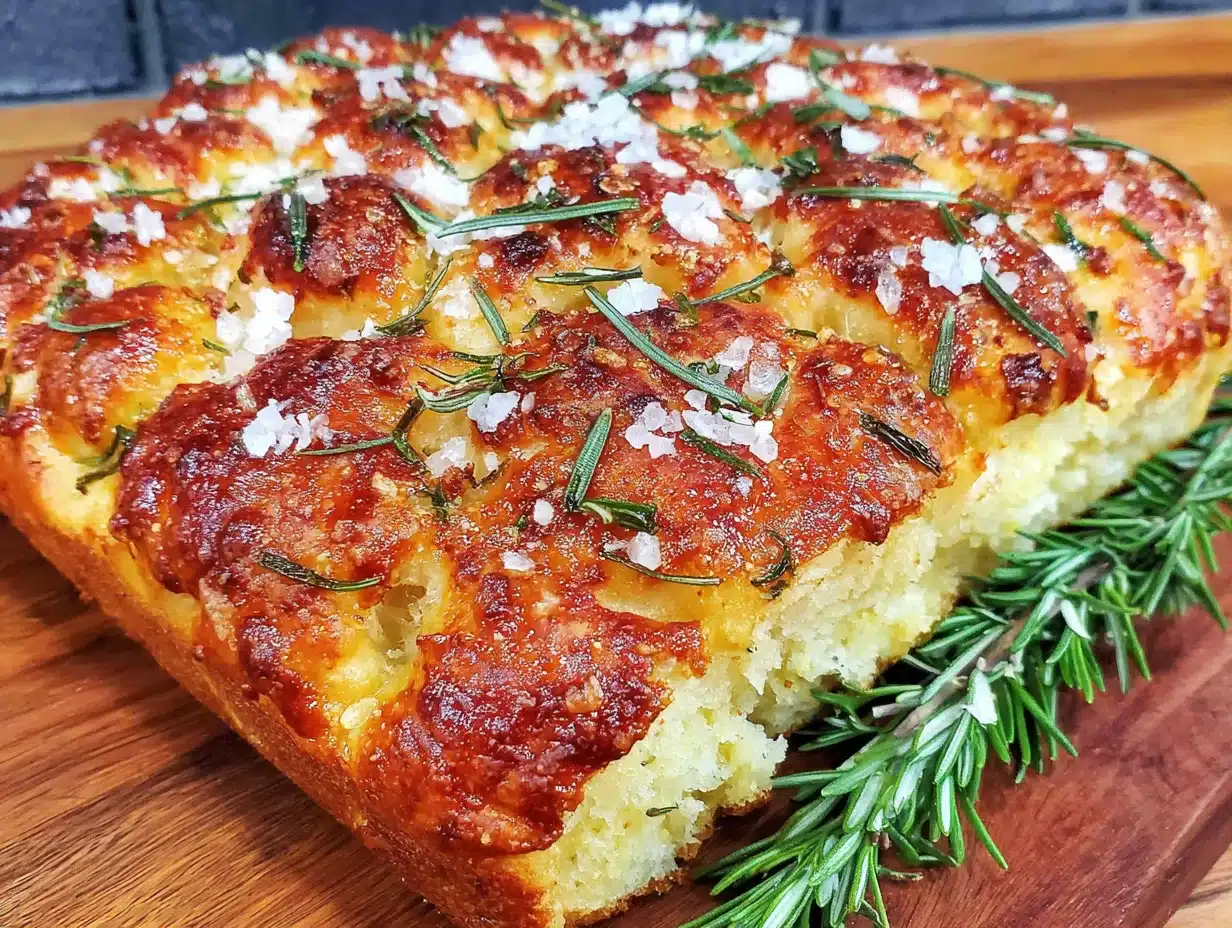
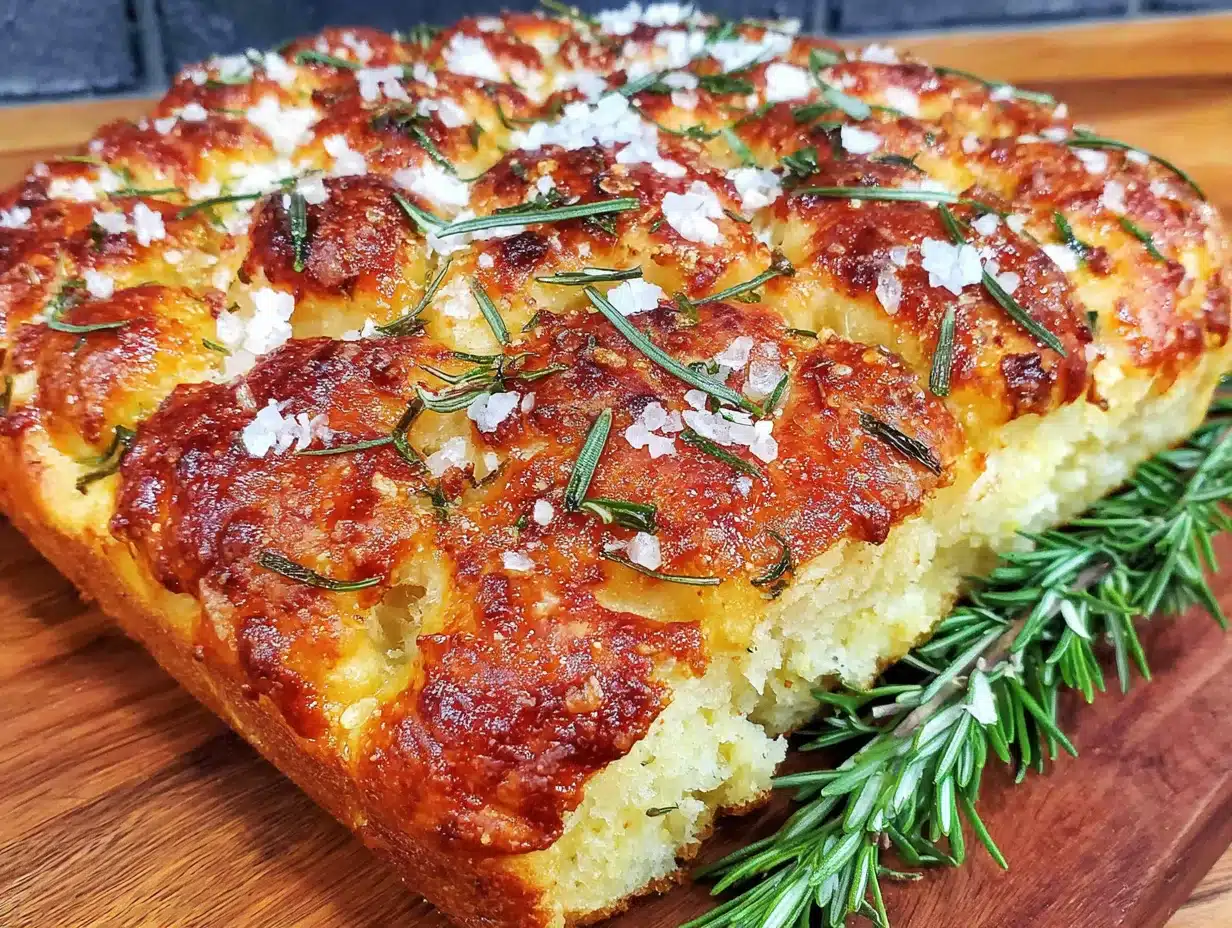
Choose a bubbly sourdough starter that has doubled after feeding, plus bread flour for the structure needed in this high-hydration focaccia. The result is rosemary-topped sourdough focaccia with a golden, craggy surface, crisp bottom, chewy center, and irregular olive-oil-filled air pockets.
Bread flour, active starter, warm water, olive oil, and fine sea salt make the dough, while fresh rosemary and flaky sea salt finish the top. The flour’s higher protein content supports the wet dough, and the olive oil is used both in the dough and generously in the pan. Its flavor comes through clearly in this short ingredient list.
During the stretch-and-fold rounds, the dough should change from a sticky puddle into something smoother, stronger, and more elastic. Wet hands help prevent sticking while handling it. After the cold proof, let the dough relax before pressing it toward the pan edges; forcing it while it resists can deflate the air bubbles built during fermentation.
Serve the focaccia warm from the pan alongside pasta, tear it into pieces for a gathering, or eat it for breakfast with coffee. A metal pan encourages a crisp bottom crust, while cast iron retains heat well. Let the bread cool on a rack so the underside does not become soggy.
Why you'll love this recipe
- Bread flour gives this wet dough the structure and chew it needs, helping the finished focaccia hold its irregular air pockets instead of spreading flat.
- Active sourdough starter brings tang and lift with only flour, water, salt, olive oil, rosemary, and flaky sea salt in the ingredient list.
- Fresh rosemary provides the most aromatic topping, while a small amount of flaky sea salt adds a distinct crunch across the oil-slicked surface.
- Good extra-virgin olive oil works in the dough, pan, and topping, so one carefully chosen ingredient shapes both flavor and crust texture.
- The long refrigerated proof develops sourdough character while making the dough easier to handle the following day, even at high hydration.
- Seasonal rosemary from a garden or market stretches far in this bread because its chopped leaves are concentrated across the entire pan.
Ingredients
- •500 g bread flour (about 4 cups)
- •150 g active sourdough starter (about 3/4 cup; bubbly and doubled in size, fed 4-8 hours before starting)
- •400 g warm water (about 1 3/4 cups; around 80°F (27°C))
- •60 g extra-virgin olive oil (about 1/4 cup, plus about 2 tablespoons for the pan and 2-3 tablespoons for drizzling)
- •10 g fine sea salt (about 2 teaspoons)
- •2 sprigs fresh rosemary (2-3 sprigs, leaves removed and roughly chopped)
- •1 tbsp flaky sea salt (about 1 tablespoon)
Instructions
- 1
Combine 400 grams warm water and 150 grams active sourdough starter in a large mixing bowl, stirring until the starter is mostly dissolved.
- 2
Add 500 grams bread flour and mix with hands or a dough whisk until no dry flour remains.
- 3
Cover the shaggy, sticky dough and let it rest for 30 minutes.
- 4
Sprinkle 10 grams fine sea salt over the dough and drizzle in 60 grams olive oil.
- 5
Pinch and squeeze the salt and oil into the dough until evenly incorporated.
- 6
With wet hands, stretch one side of the dough upward without tearing it and fold it over the top.
- 7
Rotate the bowl a quarter turn and repeat until the dough has been stretched and folded from all four sides.
- 8
Cover the bowl and let the dough rest for 30 minutes.
- 9
Repeat the four-sided stretch-and-fold round, then cover and rest for 30 minutes.
- 10
Continue the stretch-and-fold rounds for a total of 4-6 rounds over 2-3 hours, until the dough is smoother, stronger, and more elastic.
- 11
Cover the bowl tightly and refrigerate the dough for 12-18 hours.
- 12
Pour about 2 tablespoons olive oil into a 9-by-13-inch baking pan and spread it over the bottom and sides.
- 13
Gently transfer the cold dough into the center of the oiled pan without stretching it to the edges.
- 14
Cover the pan and let the dough warm at room temperature for 1 hour.
- 15
Use fingertips to gently press the dough toward the pan edges; if it resists, let it rest another 30 minutes and try again.
- 16
Cover the dough and proof at room temperature for 2-3 hours, or until puffy and nearly doubled in height.
- 17
Generously drizzle 2-3 tablespoons olive oil over the surface of the dough.
FAQ
Reviews
Pin this recipe
Tap an image to save it to Pinterest.